Modern AI Architecture
From Embeddings to Chatbots
Created by Chelcea Calin
1 / 28
Agenda
- What are Embeddings?
- What are Tokens?
- Embeddings vs. Tokens (The Context Gap)
- Common Misconceptions (The Parrot/Carrot Fun Fact)
- Vector Databases
- Vector DB vs. Traditional SQL
- The Problem with LLMs
- RAG: The Solution
- RAG Architecture
- Live Demo & Chatbot Deep Dive
2 / 28
What are Embeddings?
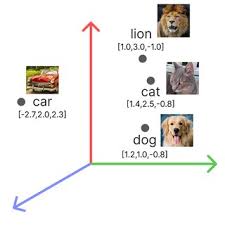
Embeddings are the fundamental building blocks of modern NLP.
-
Definition: Numerical representations for words,
letters, symbols, or images.
-
Structure: They are typically
continuous (can take any real number),
dense vectors (likely not zero), and serve as a
compressed notation to represent data.
-
The Goal: To capture
semantic meaning.
# Conceptual Representation cat = [0.2, -0.4, 0.9, ...] dog = [0.2,
-0.3, 0.8, ...]
3 / 28
What are Tokens?
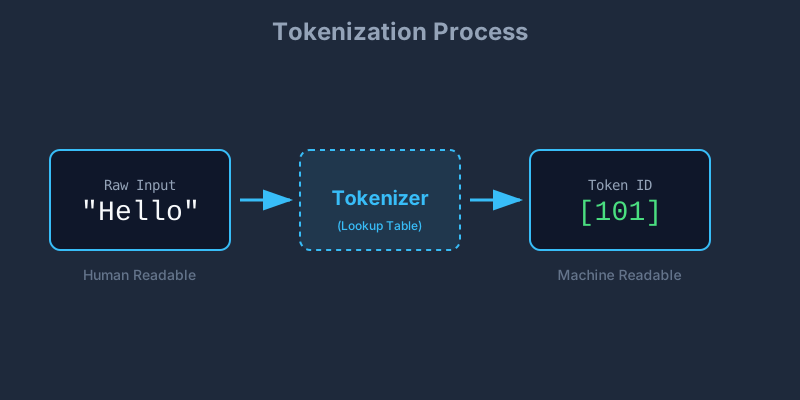
Before we get embeddings, we need Tokens. A computer cannot "read"
text; it can only process numbers.
-
Definition: The process of breaking down text into
smaller units (tokens) and assigning them a static numeric ID.
-
Words vs. Tokens: A token is not always a word.
- Common words ("Apple") = 1 Token.
-
Complex words ("Unfriendliness") = Multiple Tokens ("Un",
"friend", "li", "ness").
4 / 28
Embeddings vs. Tokens
The Context Problem: If "Bank" is always token #405,
how does the model know the difference between a river bank and a
financial bank?
The Process:
-
Each word gets converted into a token (Static ID).
-
Tokens get converted into initial embeddings.
-
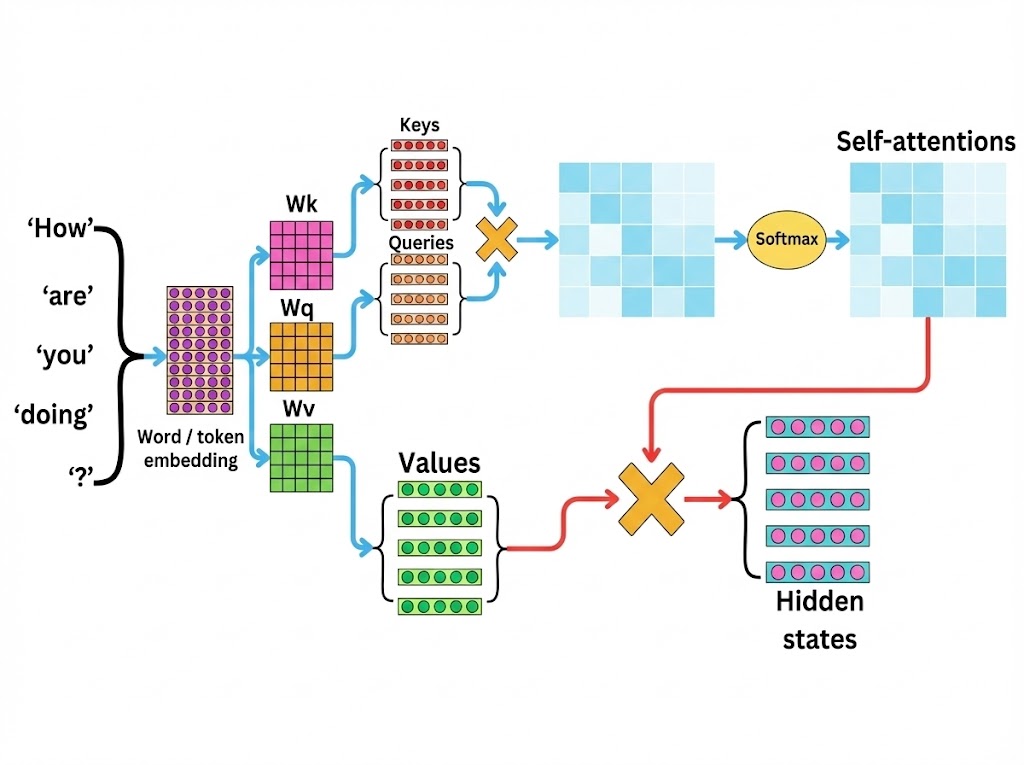
The Magic: Through a mechanism called
Self-Attention, the model looks at the whole
proposition.
-
It updates the embedding to reflect its meaning
in that specific phrase.
Key Takeaway: Tokens are just dictionary lookups.
Embeddings are dynamic, context-aware representations.
5 / 28
🧠 Deep Dive: The Self-Attention Mechanism
Note: Skip - Guide to Sources
The Objective: To calculate a new Context Vector for each token by aggregating information from all other tokens based on relevance.
// 1. Linear Projections (Learnable Weights)
Q, K, V = Embedding × (Wq, Wk, Wv)
// 2. Similarity Score (Dot Product)
Raw_Score = DotProduct(Q, KT)
// 3. Normalization (Probabilities)
Attn_Weights = Softmax(Raw_Score / √dk)
// 4. Update Step (Weighted Sum)
New_Embedding = Σ (Attn_Weights × V)
Technical Breakdown:
-
Dot Product (Q·K): Mathematically measures vector alignment. High alignment = High relevance between words.
-
Softmax: Normalizes scores into probabilities (0 to 1) so they sum to 100%.
-
Weighted Sum: The final vector is not a "replacement" but a blend of the Values (V) of all tokens, weighted by their importance.
 Source & More info
6 / 28
Vector Databases
Where do we store millions of these vector lists? Standard databases
aren't built for this.
-
Definition: Specialized databases designed to
store, index, and query high-dimensional vectors.
-
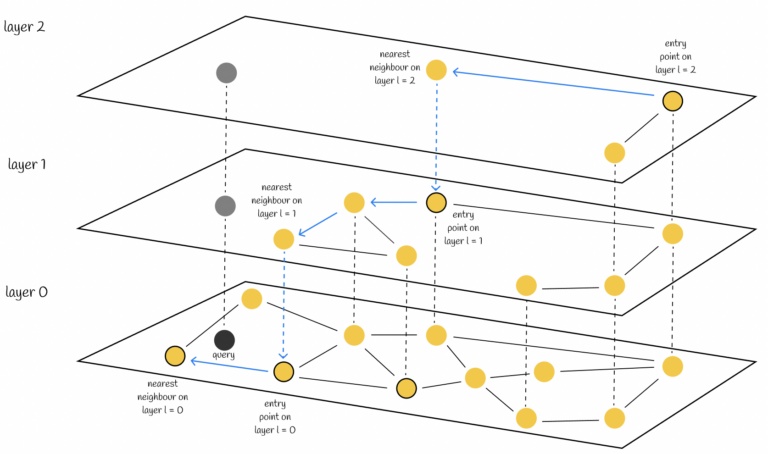
How they work: They use indexing algorithms to
create a map of the data.
-
Scalability: FAISS (In-memory, Fast) vs ChromaDB
(Storage, Filtering).
How HNSW Works (Hierarchical Navigable Small World):
Think of it like a highway system.
•
Top Layers: Express highways with few exits
(nodes).
•
Bottom Layers: Local roads for
fine-grained searching.
▶ Watch Video Explanation (HNSW)
Photo explanation:
7 / 28
Vector DB vs. Traditional DB
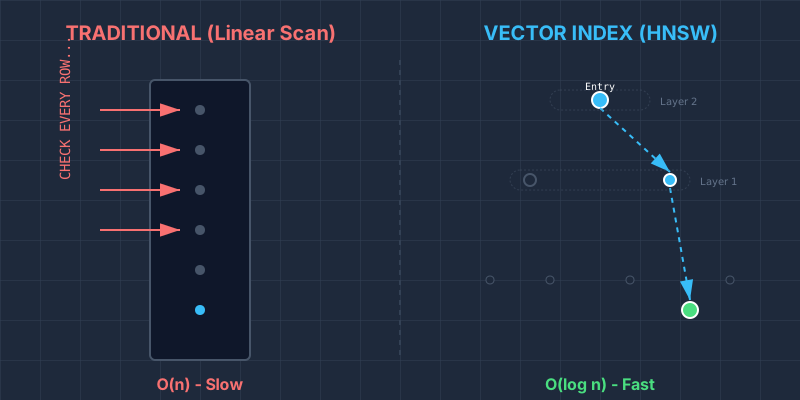
Why are they faster than just storing embeddings in a string column in
SQL?
In a traditional DB, finding "similar" items would require comparing
your query to every single row (Full Table Scan).
| Traditional SQL |
Vector DB |
| Exact keyword matching |
Semantic similarity |
| Scans rows (O(n) complexity) |
Traverses Index Graph (O(log n) complexity)
|
8 / 28
The Problem with LLMs
Large Language Models like GPT-4 are powerful, but they have a couple
major weaknesses when deployed in business:
-
1. The Knowledge Cut-off: They are frozen in time.
-
2. No Private Knowledge: They don't have access to
your internal database.
-
3. Hallucinations: They often confidently invent
facts when unsure.
-
4. Security: A public model should not know your private confidential data!
User: "What is my mother's name?"
ChatGPT: "I don't know who you are."
9 / 28
RAG: Retrieval-Augmented Generation
To fix these problems, we don't need a bigger brain; we need a
better library.
The Concept
Without RAG (Closed Book Exam): The student (LLM)
must answer purely from memory.
With RAG (Open Book Exam): The student (LLM) is
allowed to go to the library, find the relevant textbook page
(Retrieval), and use that specific information.
RAG = Search Engine Accuracy + LLM Creativity.
10 / 28
How RAG Works (The Pipeline)
How do we technically implement this "Open Book" strategy?
Step 1: Indexing (Preparation)
- Get the data required for the use case, clean it, parse it (hardest part of RAG)
- Break documents into small chunks. (many ways to do that)
- Convert chunks to vectors and store in Vector DB.
Step 2: Retrieval (The Search)
- User asks: "Tell me about topic X."
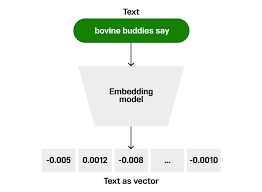
- System receives question from user, converts it to EMBEDDING and
- System searches VectorDB for documents relevant to the Embedded question
Step 3: Generation (The Answer)
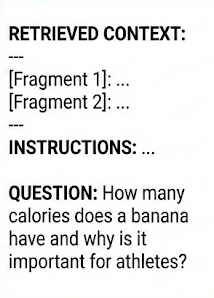
- We retrieve the documents from DB
- And then append the text as context to the llm along with the user question
- LLM generates a factual response.
11 / 28
2D Representation Demo
We use dimensionality reduction (PCA/t-SNE) to visualize these complex
vectors on a 2D screen.
12 / 28
RAG Challenges in Production
Building a prototype is easy. Production is hard.
-
1. Handling Unstructured Data (ETL):
Garbage In, Garbage Out. Extracting clean text from PDFs, complex
tables, and messy HTML is 80% of the work.
-
2. Data Freshness (The Sync Problem):
If you update a SQL row, the Vector DB becomes "stale".
Solution: Cron Jobs or CDC (Change
Data Capture) pipelines to re-embed data daily/hourly.
-
3. Query Routing:
Does the user need "Technical Support" or "Sales Info"? We need a
semantic router (Classifier) to pick the right index.
-
4. Memory & Context:
Balancing "Chat History" vs. "Retrieved Documents" within the token
limit.
-
5. Security:
Especially for more general RAG systems, we need to restrict an user to ask questions about topics he is restricted to seeing.
-
6. Cost:
Indexing a lot of documents, keeping a lot of memory, big prompts etc will add the cost quickly.
-
7. Speed:
No one wants to wait 2 minutes for a query.
The "Lost in the Middle" Phenomenon:
LLMs tend to focus on the beginning and end of the context window. If
the answer is buried in the middle of 10 retrieved documents, the
model might miss it.
13 / 28
Phase 2: The Chatbot
Deep dive into system logic, storage strategies, and routing.
14 / 28
1. Storage & Retrieval Strategy
We use a hybrid approach to balance speed and data integrity.
-
Vector Store (FAISS): We use
all-MiniLM-L6-v2 for embeddings.
-
Fast Retrieval Maps: To ensure O(1) access times,
we maintain two in-memory hashmaps:
-
The ID Hash: A deterministic signature:
hash(folder_name + filename + sheet_name)
-
Data Source: We do not store the
actual file content in FAISS. We store metadata pointers. The source
of truth is always MinIO.
-
Periodic schedules that reindex data based on the hash
Tech Stack: Python, Flask, SentenceTransformers,
FAISS.
15 / 28
2. Live Logic Trace
How the system "reads" the file structure before answering.
{
  "unique_id": "4f257...db",
  "filename": "Risk_Summary_Global_Q3.xlsx",
  "sheet_name": "All Risks - Regions",
  "columns": [
    "0: Risk Group",
    "1: Net Total (USD)",
    "2: Gross Total (USD)"
  ],
  "sheet_summary": "Financial risk summary focusing on market exposure.
   Identifies significant risk categories...",
  "is_complex": true,
  "last_modified": "2025-12-20 12:00:30",
  "isNewest": true,
  "minio_url": "s3://secure-vault/risk-reports/2025-12-20/summary.xlsx"
}
Step 1: Input Analysis
User asks: "What is the Net Total risk?"
Step 2: Vector Match
System matches "Net Total" column in JSON to user query.
Step 3: Routing
Intent: CONTENT_RETRIEVAL
(System pulls file from MinIO URL)
16 / 28
3. Data Hydration & LLM Handoff
We retrieve based on a similarity search on the file
SUMMARY AND the other metadata such as columns, not just keywords.
-
Search: Find top matches in FAISS based on similarity.
-
Fetch: Use the stored URL to pull the binary from
MinIO.
-
Parse: Clean the Excel/PDF (remove empty
rows/cols).
-
Format: Convert the clean data into
Markdown ( very easy to understand for LLMs).
-
Handoff: Pass the Markdown + User Query + Expanded
Metadata to the LLM for final answer generation.
Expanded metadata: File Name, Folder Location, Accuracy Score etc - it will prevent false positives
17 / 28
4. Intelligent Router (The Intent)
Every user message is categorized into one of 5 specific intents.
3 Functionalities: Content, MinIO, SQL
5 Possible outputs(currently):
🔵
Content: Excel parsing & Vector Search (RAG).
🟡 MinIO: File operations. Has 2 sub-intents:
• Predefined: Uses standard
functions (List/Check).
•
Dynamic: LLM generates code based on available functions.
🟢 SQL: Database query generation.
🟣 History: Exit early. Answer purely from
conversation memory.
🔴 Breach_Attempt: Exit early. User asked an unsafe
query.
18 / 28
5. Memory & Query Rewriting
We maintain a dedicated memory store for each user session. This
bridge allows the system to understand context, pronouns, and intent
shifts just like a human would.
Scenario 1: SQL Parameter Update
User: "Show me the latest 5
reports." ➔
System executes SQL (LIMIT 5)
User: "Actually, I want the top
10."
Internal Logic: The LLM sees the
previous SQL, detects the intent to change the quantity, modifies
LIMIT 5 to LIMIT 10, and re-executes.
Scenario 2: Semantic Disambiguation
User: "What is the exposure for
the Q3 Risk Report?"
User: "Who approved
it?"
Rewritten Query: "Who approved
the Q3 Risk Report?"
(This rewritten query is sent to FAISS, ensuring we find the
approver for the correct report.)
The Benefit: This decoupling means our Vector
Database and SQL engine never have to guess. They always receive
complete, standalone instructions.
19 / 28
6. Index Manager & Scheduler
Ensuring consistency between MinIO and FAISS.
ID = hash(folder + "_" + file + "_" + sheet)
-
Scheduler: Runs every 30 mins to scan the bucket.
-
Validation: Checks
last_modified date
against the index.
-
Update Logic: If the date differs OR the ID is new,
we re-process. Otherwise, we skip to save resources.
20 / 28
7. Response Transparency
The response object contains critical metadata for user trust.
Answer: "The total risk is $45M..."
📂 Sources: Risk_Report_Q3.xlsx [Match Probability:
92%]
📝 User Query: "Total risk?"
🧠 Refined Query: "Calculate total net risk for Q3
reports"
💻 Code: [View Snippet]
⏱️ Time: 1.2s
21 / 28
8. Security Guardrails
Paranoid security measures for code execution.
-
Namespace Execution: Python runs in a restricted
scope. No access to globals/OS.
-
Defensive prompt engineering: Instruct LLM to redirect to BREACH_INTENT in case user tries to use malicious prompts.
-
Restricted Python Built-ins: `os.system`,
`subprocess`, `open(write)` are strictly blocked.
-
SQL Restrictions:
- User has
SELECT only permissions.
-
Keywords like
DROP, TRUNCATE,
ALTER are blocked at the prompt injection level.
22 / 28
9. System Benefits
Why this architecture works for Enterprise:
Flexibility:
LLM Factory allows swapping
models (GPT-4, Claude) seamlessly.
Accuracy:
Scheduler ensures we never answer
from stale files.
Safety:
Router blocks malicious queries before
DB access.
Auditability:
Full transparency on queries
rewritten and code executed.
23 / 28
Note: Skip
10.Sources
24 / 28
Note: Skip
11. Useful learning materials
- Generative Ai for beginners: Link
- RAG and Python tutorial: Link
- RAG Techniques(not for beginners) Link
- AI Tool Calling Link
Quick Note:
Tool calling can be done without using a library, you can tell llm what functions you have and what params and to give you a json which you parse and treat accordingly, so it's nothing magical, but it's a more standardized way of doing things.
25 / 28
Q & A
Thank you for listening.
26 / 28
End of Presentation
27 / 28